Kurt Carlson, 69, is an Army veteran who served in Korea on the DMZ. After leaving the Army in 1977, he went on to build a remarkable career as a glass artist over the past 40 years, with his work and biography featured by the Corning Museum of Glass.
His art is also found in private collections across the U.S., Italy, Japan, and Sweden.
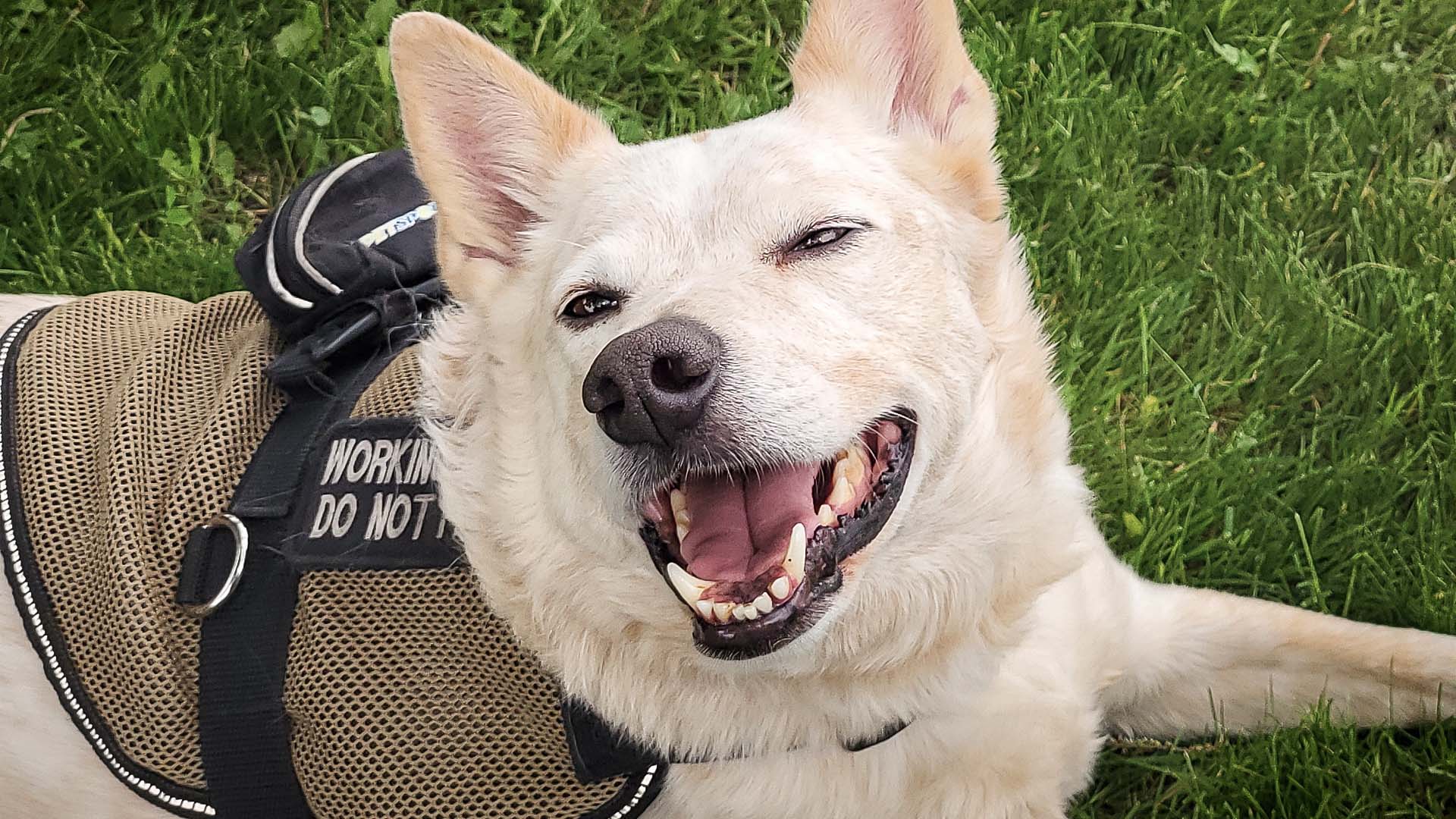
A recent K9P4P graduate with his K9 partner Wylie, here’s his story
My first year I was on the DMZ in Korea. Second year I stayed in Korea but I was a little bit south of there. I had some things happen in the service where I ended up with extreme claustrophobia about things behind me. It was very hard for me to go to sleep. I was claustrophobic but I had to go to sleep!
And it’s kind of service connected you know? With drinking you’re encouraged to because everybody’s going through the same thing. You ‘man up’ and take a drink. And that’s how you unwind and that’s how you finally go to sleep. So yeah, that was an issue for a while. And then, whatever, I stopped drinking. That was 28 years ago.
I experienced isolation in the sense that there was really nobody I could talk to about any of the experiences that I had. When I got out I immediately started using the GI Bill but was in with high school kids who were just starting college. I felt kind of isolated with that.
I had family that I stayed with briefly when I was in community college. I came up to Rochester Institute of Technology (R.I.T.) in Rochester for my bachelor’s degree. What turned out fairly good was working for the VA office at the school in Rochester which was very helpful because they always had someone guiding us on how to use the GI Bill.
I had gotten hurt and ended up staying in the Army 3 months longer; I had to go through some surgeries. Anyway, it taught me how to learn the VA system, which is another thing that keeps so many veterans away. It’s so daunting. So I got brought into it while I was going to school. I had a diagnosis for PTSD.
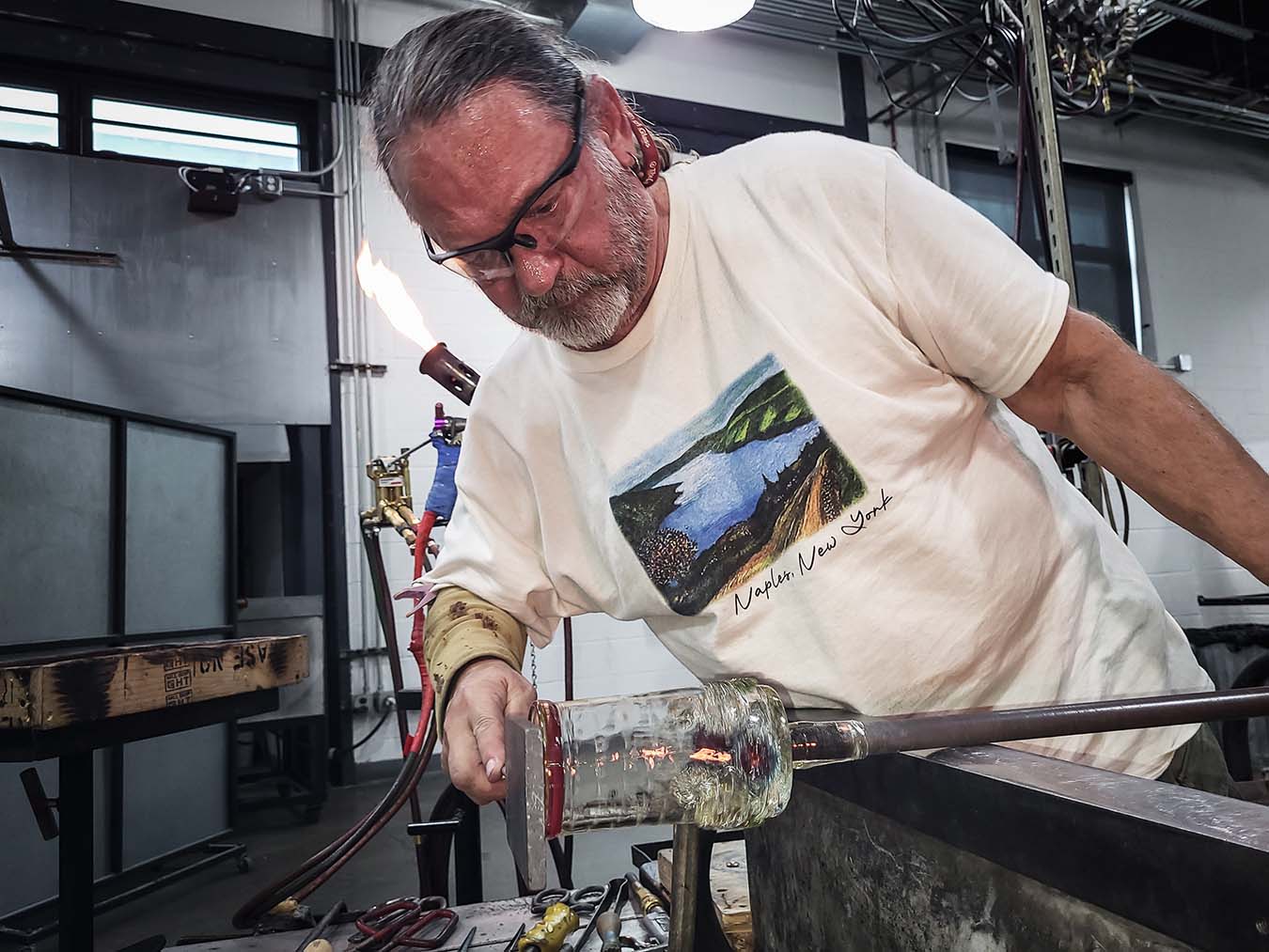
When I got out of the service I went into college and got into psychology. I wanted to understand what the f— I just saw. So I was thinking psychology; it was my second year of psychology and I also had to go through statistics; it was a required class for psychology and I knew I was going to hate it. When it was time for the next semester’s classes, one of the electives was an art class called ‘glassblowing’. I thought that would be good with psychology… I took that class and started to look at it and see everything about myself, how I approach things, just everything… So I changed my major at Rochester and got a Fine Arts degree in Glassblowing.
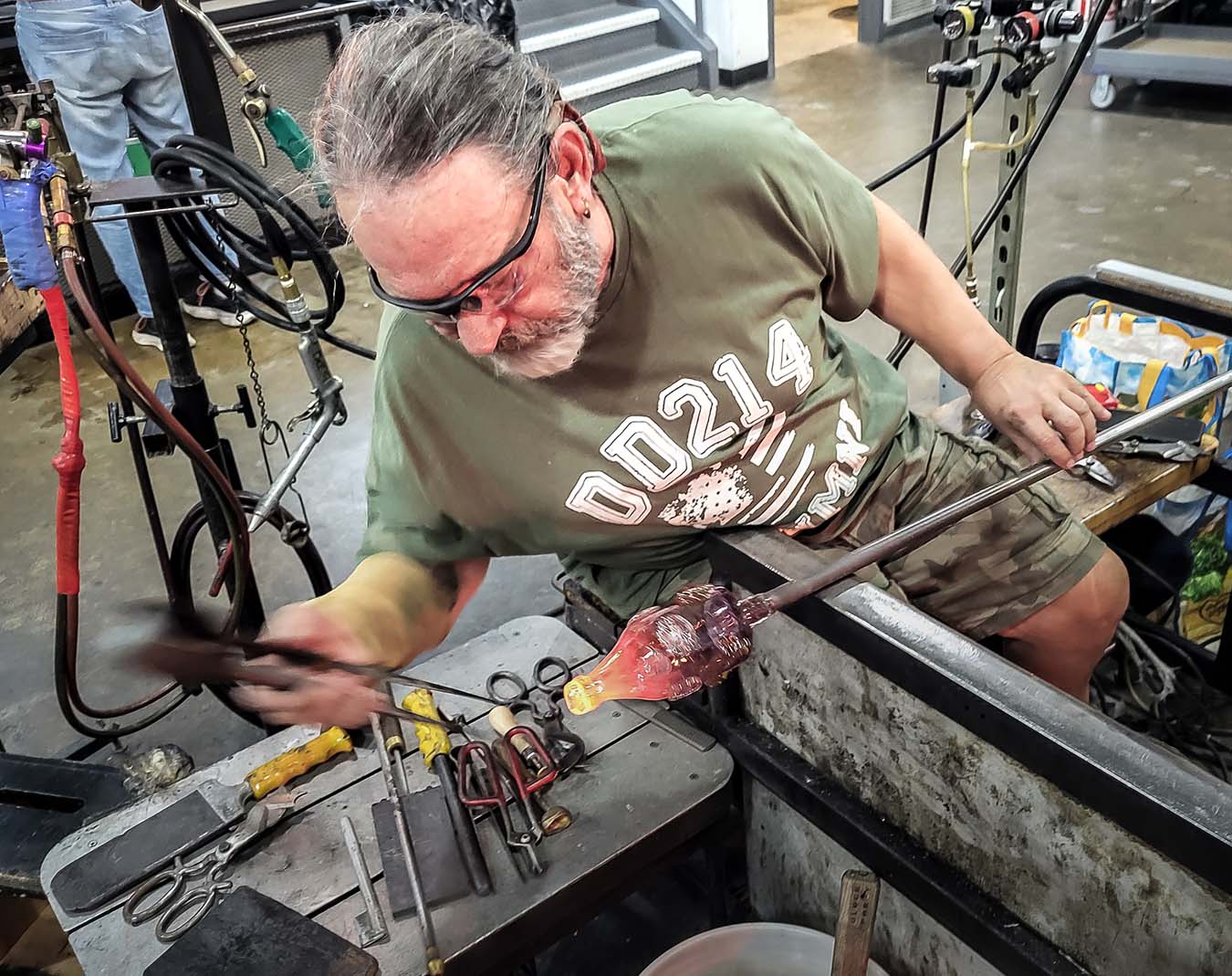
For me, the whole thing with becoming a glassblower was wrapped around PTSD. That’s how I found a release. I could see myself. I’ve been a glassblower for over 40 years. And my son, Caleb, is a glassblower now. You ever hear of the Corning Museum of Glass? He teaches glassblowing classes there. And I’ve had my own studio for many years.
It was a great field to get into because people don’t sneak up behind me when I’m blowing glass. I have one assistant. Who’s going to come up on a glassblower?!! You have your space.
I was so paranoid about someone coming up behind me, I got into the martial arts and was a judo instructor for many years. Just to manage reactions… So our whole personality is a reflection of our PTSD. It’s sort of strange.
I had retired in a small army trailer and I was going to do some traveling and I got a dog and wanted to take this dog everywhere with me. So I was going down to Florida for my winters and I looked up different K9 stuff on YouTube and it kind of fascinated me. I was down there for 6 months and that’s how I got the connection to K9 Partners for Patriots. It just worked out for me.
I brought my dog and he’s a cattle dog. Like a red heeler. They’ve got minds of their own. The training was fantastic. It just opened doors. I had always had dogs my whole life; well-trained dogs. But I never got into training to that extent. There’s just doors that open between you and the dog and the dog just knows what you’re going to say… before you do it! I never had that experience before.
He’s very aware of my surroundings… just the way he positions himself.
I hit plateaus. I’d go to class and talk to different people and everybody said ‘oh yeah, we hit a plateau,’ but, we’re not really doing any training now so we’re not hitting any plateaus.
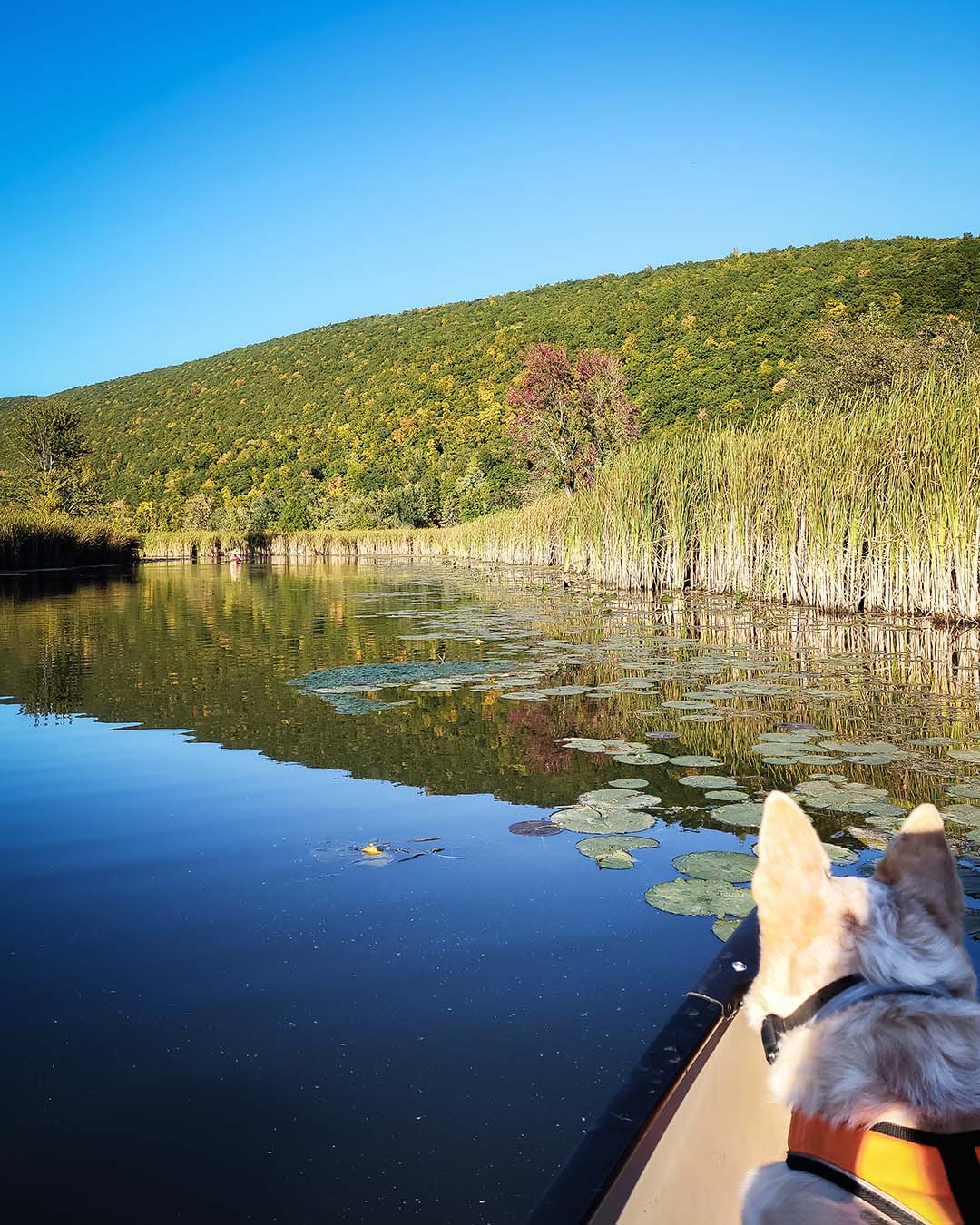
I’m in a small town in the country so I can’t say there’s a lot of people who could give me a problem. I’m not running into them. The only thing I run into is people who want to pet the dog. I don’t have a problem with it because my dog doesn’t get much of that… we live alone.
I got stuck here for the winter, this past one was a long, cold winter. So I was really isolated and the dog made it livable! The dog also made it that I wasn’t going out in public. My world was around the dog and the house. It helps me with situations in public, but also makes it more livable to not do that. I don’t know if that’s good all the time.
My son lives down by Corning about an hour south of me. I don’t know if he would attribute much change with Wylie, just that he felt better with me having the service dog. Because the service dog is helpful. I’m getting older and by myself in the trailer.
A service dog helps all the way around. It helps with your access to the community and it helps with just that bond that’s created with the dog. Like I said, I’ve had dogs all my life but I never had a bond like this and it’s created during the training. There’s a certain stage where something just happens and you’re connected with your dog.
I think he’s a thinker and he knows what I’m talking about. I don’t even have to say a command sometimes. He just knows by a gesture. You just have that connection and you get a lot of that through the training and the public because the dog kind of centers on you a little bit better. The dog is not distracted as much.
We’re so used to walking these dogs… bouncing on the end of a leash, that’s how it is. There’s so much possibility with that relationship and that makes the connection with other people all the better.
Just having a dog, where I’ve got to take the dog out… I’ve got to do that, it gives you some kind of structure. Your responsibility. Your love of that creature can be very helpful!
The training was so amazing I would still want to put my dog through that. You may get to the point when maybe I don’t need a service dog… the training was very remarkable.
I had a therapist one time criticize another vet who lets the service dog check out the house before he goes in. And he’s like, ‘that’s not helping his fears…’
So f—king what! So what! He’s a vet. Give him that little bit of comfort. Let him deal with it as he may. The whole thing with PTSD now is they’re trying to desensitize you. Making you relive this awful stuff over and over. With a service dog it’s so much more of a gentle way, a loving way with the dogs. I’m very fortunate that I found you guys.